ACA Warns Player Involvement Is Not Guaranteed in a Privatised BBL
Australian Cricketers’ Association chief executive Paul Marsh has warned that player participation in a privately owned Big Bash League cannot simply be assumed until Cricket Australia and the players reach a new financial and contracting agreement.
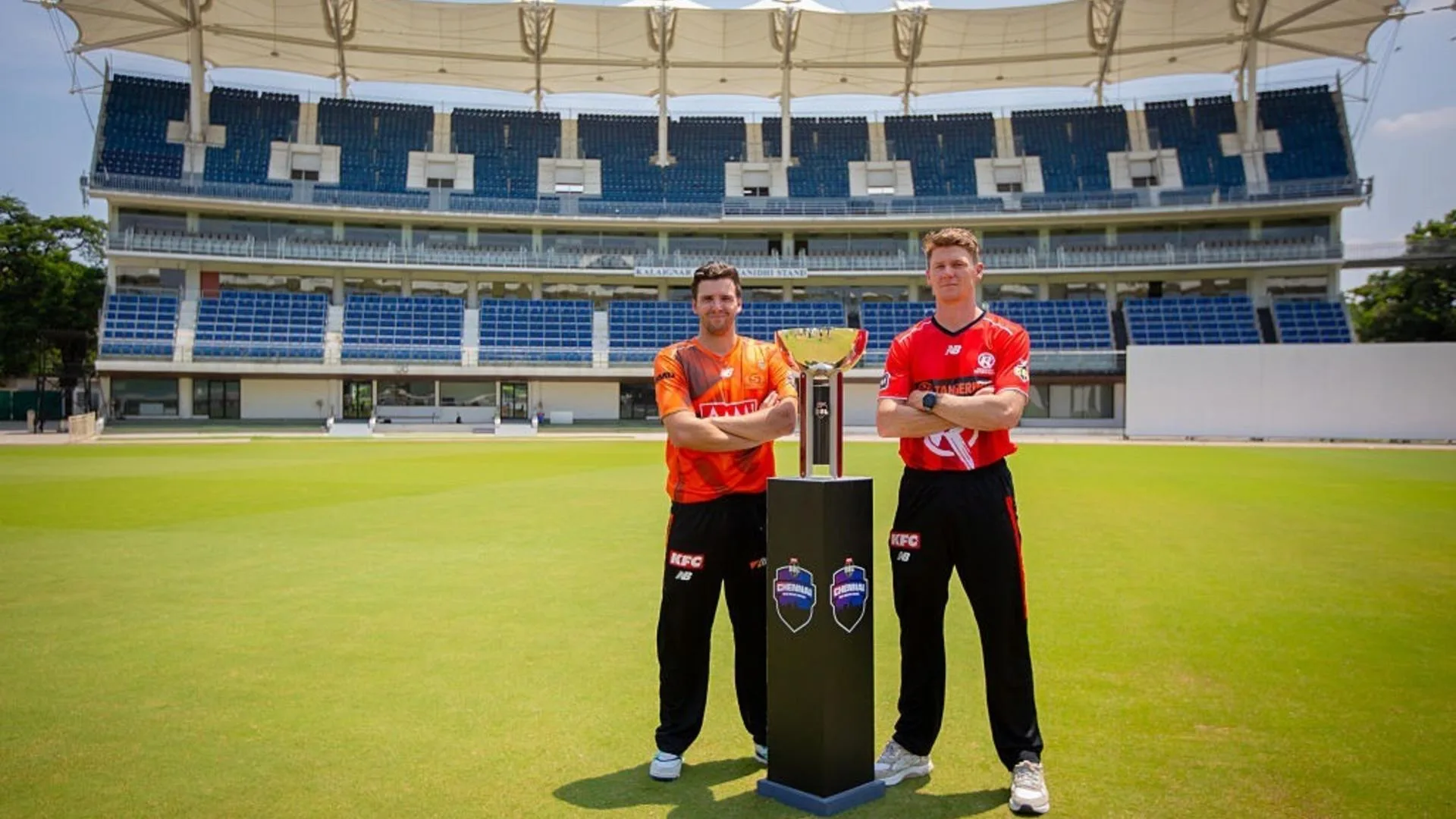
The warning does not put BBL|16 in doubt. The 2026 to 27 Big Bash season will go ahead under the existing structure, beginning with Melbourne Renegades against Perth Scorchers in Chennai on December 12.
The disagreement instead concerns what happens when private ownership begins, with Cricket Australia targeting the 2027 to 28 season for new ownership of the Melbourne Renegades.
At the centre of the dispute is a significant question: how should players share in the financial value created when BBL teams are sold to private investors?
What has the ACA warned Cricket Australia about?
Marsh says Cricket Australia cannot assume Australian players will automatically participate under a new privately owned BBL structure without reaching an agreement with the Australian Cricketers’ Association.
Speaking about the negotiations, Marsh said the two parties remain divided over whether players should receive a share of the money generated through franchise privatisation.
The ACA believes the existing player revenue sharing agreement gives players a claim over proceeds generated when cricket assets such as BBL licences are sold.
Cricket Australia takes a different position and does not regard the upfront capital raised through franchise sales in the same way as normal operating revenue.
That difference has become one of the most important unresolved issues in the BBL privatisation process.
Is BBL|16 affected by the player dispute?
No. BBL|16 is not currently affected.
Cricket Australia has already confirmed that the upcoming men’s and women’s Big Bash seasons will continue under the existing arrangements.
| BBL privatisation question | Current position | |
|---|---|---|
| Is BBL | 16 going ahead? | Yes |
| Does the warning affect the 2026 to 27 season? | No current impact | |
| First BBL | 16 match | Renegades vs Scorchers |
| Opening date | December 12, 2026 | |
| Opening venue | M.A. Chidambaram Stadium, Chennai | |
| First private BBL ownership targeted | 2027 to 28 season | |
| First club being sold | Melbourne Renegades | |
| Renegades stake for sale | 100 percent | |
| Player agreement finalised? | No | |
| Main unresolved issue | Financial and contracting structure |
Fans can see every confirmed fixture on the BBL 2026 to 27 schedule.
This distinction is important because the ACA warning relates to the future structure of the league, not a player withdrawal from the coming Big Bash season.
Why are the ACA and Cricket Australia disagreeing?
The dispute revolves around how money entering Australian cricket through private investment should be treated.
Under the existing player agreement, Australian cricketers participate in a revenue sharing model.
The ACA argues that if valuable BBL assets are sold, players have a financial interest in those proceeds because player participation is fundamental to the value of the competition.
Marsh has indicated that the association is willing to consider another structure.
Instead of players receiving a large one off portion of franchise sale proceeds, the ACA could accept that money remaining with Cricket Australia and the states if players receive a larger share of ongoing cricket revenue in future years.
The logic is straightforward.
A one time franchise sale produces a large immediate payment.
A higher ongoing revenue share would instead allow players to benefit as the commercial value of the BBL grows under private investment.
No final agreement has been reached.
The original report on Marsh’s comments can be read through Wisden’s coverage of the ACA warning.
What is Cricket Australia actually privatising?
Cricket Australia is not selling the entire Big Bash League to one investor.
It has adopted what it calls a self determination model.
Under this structure, individual state associations can decide whether and when they want private investment in their BBL and WBBL teams.
The first major transaction is Melbourne Renegades.
Cricket Australia has approved a process to sell 100 percent of the licence currently operating the Melbourne Renegades men’s and women’s teams.
Private ownership is expected to begin from the 2027 to 28 season rather than BBL|16.
The Melbourne Renegades BBL|16 team therefore remains unchanged by the ownership process for the upcoming season.
What control would private BBL owners actually have?
Private ownership does not mean an investor would gain complete control over Australian cricket.
Cricket Australia has said it intends to retain control of several competition wide areas.
| Area | Expected control |
|---|---|
| International scheduling | Cricket Australia |
| Australian player availability | Cricket Australia |
| BBL salary cap | Cricket Australia |
| Media rights | Cricket Australia |
| Approval of investors | Cricket Australia |
| Competition structure | Cricket Australia |
| Club operations | Private owner or state |
| Commercial investment | Private owner and club |
| Branding changes | Subject to approval |
These protections matter because one concern around franchise ownership is that wealthy investors could pressure Australian players to prioritise the BBL over international cricket.
Cricket Australia has said Test cricket will continue to take priority for centrally contracted Australian players.
The governing body’s official BBL privatisation announcement also states that CA will retain control over player availability, salary caps, international scheduling and media rights.
Why player participation matters to BBL valuations
This is where the ACA warning becomes commercially important.
A BBL franchise is more valuable to an investor if the competition can regularly feature Australia’s best cricketers.
Private owners would be investing not only in a team name and commercial rights but in the future earning potential of the league.
That value can be affected by:
- Which Australian players are available
- How long leading players can appear during the season
- The BBL salary cap
- Competition scheduling
- International player recruitment
- Broadcast audiences
- Sponsorship and ticket revenue
This means the player agreement is not simply an employment issue sitting outside the privatisation process.
It directly influences the product investors are being asked to buy.
Could private investment increase BBL player salaries?
That is one of the major arguments in favour of private investment.
The Big Bash increasingly competes with leagues such as the IPL, SA20, ILT20 and Major League Cricket for international talent.
More private capital could strengthen club finances, commercial operations and the league’s ability to retain high quality players.
BBL|16 has already moved back to direct international recruitment after the overseas player draft was removed.
The current BBL player signings show clubs becoming increasingly aggressive in the overseas market, with players such as Jonny Bairstow, Michael Bracewell, Finn Allen, Ben Stokes and Shai Hope among the major additions.
Private investment could increase that competition further.
But the ACA’s position is that Australian players should also receive a fair long term share of the additional commercial value being created.
Why the Melbourne Renegades sale matters
Melbourne Renegades are effectively the test case for the new model.
Cricket Australia intends to sell the full licence, while retaining important league wide controls.
A successful sale would give CA and the states a clearer indication of what BBL franchises are worth to private investors.
It could also influence future decisions involving other Big Bash League teams.
Under the self determination model, however, a Renegades sale does not automatically force every other state to privatise its team.
Each state can make its own decision.
That means the future BBL could eventually contain a mixture of privately owned and state controlled franchises.
Could the Melbourne Renegades name change?
Potentially, but a private owner would not have unrestricted power to rebrand the club.
Cricket Australia has said any proposed change to the Renegades name, colours or branding would require approval.
So the sale of the licence does not automatically mean the Melbourne Renegades identity disappears.
For BBL|16, nothing changes.
Will Sutherland’s side will continue competing as the Melbourne Renegades, with Luke Ronchi as head coach and new overseas signings Jonny Bairstow and Michael Bracewell included in the current BBL|16 squads.
What happens next in the BBL privatisation talks?
There are now two processes developing at the same time.
Cricket Australia is moving ahead with the Melbourne Renegades sale process.
At the same time, CA and the Australian Cricketers’ Association still need to settle the financial and contractual framework that would apply to players once private ownership begins.
The ACA has also pursued an independent resolution process around the disagreement over how privatisation proceeds should be treated.
That makes the next major development more important than simply identifying who buys the Renegades.
The bigger question is whether Cricket Australia, the states and the players can agree on a model that gives investors commercial certainty while preserving the existing revenue sharing relationship between Australian cricket and its players.
Until that happens, the sale process can continue, but the long term player framework for a privatised Big Bash remains unfinished.
BBL privatisation FAQs
Are BBL players refusing to play?
No. There is currently no announced BBL player boycott. The ACA’s warning concerns participation under a future privately owned structure if a new agreement is not reached.
Will BBL|16 still take place?
Yes. BBL|16 starts on December 12, 2026, and the current season is not expected to be affected by the privatisation dispute.
Which BBL team is being sold first?
Melbourne Renegades are the first franchise formally being taken to market, with a 100 percent stake in the licence available to private investors.
When could Melbourne Renegades become privately owned?
Cricket Australia is targeting new ownership from the 2027 to 28 BBL and WBBL seasons.
What is the main dispute between the ACA and Cricket Australia?
The key disagreement concerns how players should benefit financially from franchise privatisation, including whether sale proceeds fall within the existing revenue sharing framework or should be replaced by a higher share of ongoing revenue.
Will every BBL team be privately owned?
Not necessarily. Cricket Australia’s self determination model allows individual states to decide whether and when to introduce private investment into their teams.
The article block itself is clean Markdown for WordPress copying. The citations above the block are only my verification trail and won’t come across when you copy the article.